

At the end of the busiest part of the boating season, attention often turns to the engine, onboard systems and safety equipment. However, another area deserves just as much care: the hull below the waterline.
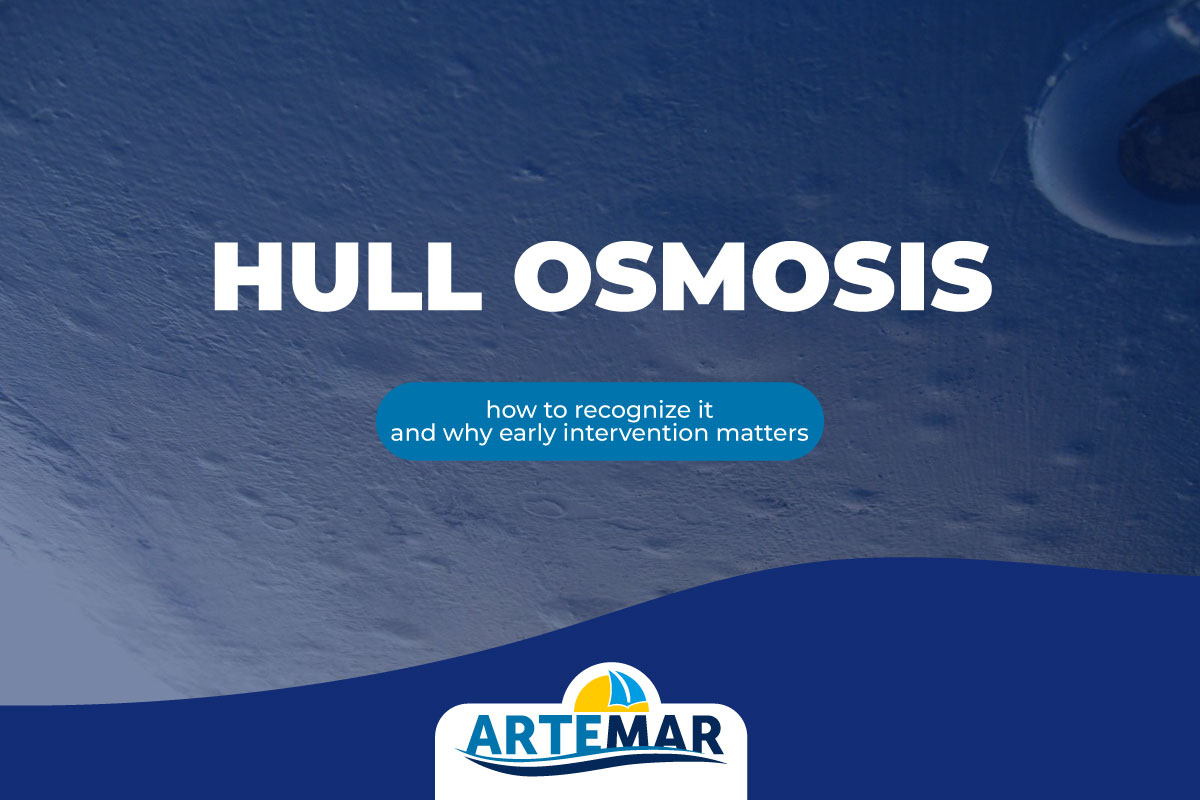
On fibreglass boats, one of the issues that should not be overlooked is osmosis. It is a process that may develop gradually and remain difficult to detect during its early stages. If left unaddressed, however, it may eventually affect the deeper layers of the hull laminate.
Recognising the possible warning signs and arranging a professional assessment makes it possible to plan the appropriate work before the damage becomes more extensive.
What is hull osmosis?
The GRP hull of a boat is generally protected by an outer layer of gelcoat, which shields the laminate beneath it and gives the surface its smooth, even finish.
Over time, water and moisture can gradually permeate this protective layer and reach the laminate. There, they may react with residual components in the resin, producing substances that attract even more water.
The resulting increase in pressure within the material may cause swelling and the formation of gelcoat blisters. This is one of the most widely recognised signs associated with osmosis.
However, the process does not affect every boat in the same way. It may be limited to a few isolated areas or spread across a larger section of the underwater hull, with varying levels of depth and severity.
What signs should you look for?
The most familiar sign is the appearance of small blisters or raised areas in the gelcoat, particularly below the waterline.
Other possible signs include:
- irregularities on the surface of the underwater hull;
- small cracks or changes in the gelcoat;
- areas where the coating appears to have lifted;
- unusually high moisture levels within the laminate;
- isolated blisters or blistering spread across a wider area.
However, it is important not to jump to conclusions. Not every blister found on a hull is necessarily caused by osmosis, and a visual inspection alone cannot accurately determine the nature or depth of the problem.
Whenever unusual signs are found, the hull should therefore be professionally assessed.
Why does early action matter?
Osmosis is a progressive process. During its early stages, it may affect only the gelcoat or a superficial section of the laminate. In more advanced cases, moisture-related damage may extend deeper into the hull structure.
Identifying the issue early makes it possible to:
- determine the true extent of the affected areas;
- distinguish a superficial defect from deeper laminate damage;
- plan the most appropriate treatment;
- prevent moisture from continuing to affect the laminate;
- protect the condition and long-term value of the boat.
Delaying an inspection may turn a localised repair into a much more complex project. Early action, on the other hand, allows the work to be scheduled carefully and completed without the time pressure that often comes with the start of a new boating season.
How is the hull assessed?
An accurate assessment generally requires the boat to be hauled out and the underwater hull to be thoroughly cleaned.
The inspection may include a visual examination of the surface and moisture readings taken at several points across the hull. These checks help determine whether the issue is isolated or widespread and what type of treatment may be required.
A professional inspection is particularly important because the external appearance of gelcoat blisters does not always reflect the actual condition of the underlying laminate.
The underwater hull must therefore be assessed as a whole before any work begins, rather than relying on a standard treatment or an improvised solution.
How is hull osmosis treated?
The appropriate treatment depends on the condition of the hull and the extent of the blistering.
Where only a few isolated blisters are present, it may be possible to treat each affected area individually by removing the damaged material, thoroughly cleaning the cavities and restoring the surface.
Where the problem is more widespread, the gelcoat or damaged sections of laminate may need to be removed. The underwater hull must then be washed and allowed to dry thoroughly, with its moisture content monitored over time.
Drying is one of the most important stages of the entire process. Applying new coatings while excessive moisture remains within the laminate could compromise the effectiveness and durability of the repair.
Once the surface has been restored, an epoxy barrier coating system may be applied to reduce water penetration and protect the laminate. The underwater hull can then be prepared for the application of the appropriate antifouling system.
The exact procedure and timescale must always be determined according to the actual condition of the individual boat.
Prevention before the first signs appear
There is no need to wait for visible blisters before taking care of the underwater hull.
Regular inspections, appropriate maintenance and suitable protective coating systems can help reduce the risk of moisture penetration and preserve the condition of the hull.
The period following the summer boating season can be a suitable time to arrange a haul-out, assess the underwater hull and schedule any necessary maintenance or refitting work.
Even when no obvious signs are visible, a preventive inspection may identify small defects before they develop into more significant problems.
Support from Artemar
At the Artemar boatyard in Termini Imerese, every project begins with an assessment of the boat’s actual condition.
As part of its maintenance and refitting services, the Artemar team can inspect the underwater hull and plan repair work or preventive anti-osmosis treatments for fibreglass surfaces.
From haul-out and hull preparation to repair and final protection, every stage is managed with care, selecting the most appropriate treatment cycle for the characteristics and condition of the boat.
Checking the hull today can help prevent more complex work in the future and ensure that the boat is properly prepared for the seasons ahead.
For further information or to request an assessment of your boat, the Artemar team is available to help.
